Supported Tables
Data lineage is available for external lakehouse tables using Iceberg or Delta Lake with Databricks Unity Catalog. Relationships are tracked at the topic-to-table level.Prerequisites
- Register a Unity Catalog connection and enable lakehouse delivery for the source topic or namespace.
- Ask your Databricks administrator to grant the catalog connection’s service principal CREATE EXTERNAL METADATA on the metastore, along with permission to manage the corresponding external metadata and lineage relationships.
Grant CREATE EXTERNAL METADATA
A Databricks administrator can grant the permission in Catalog Explorer:-
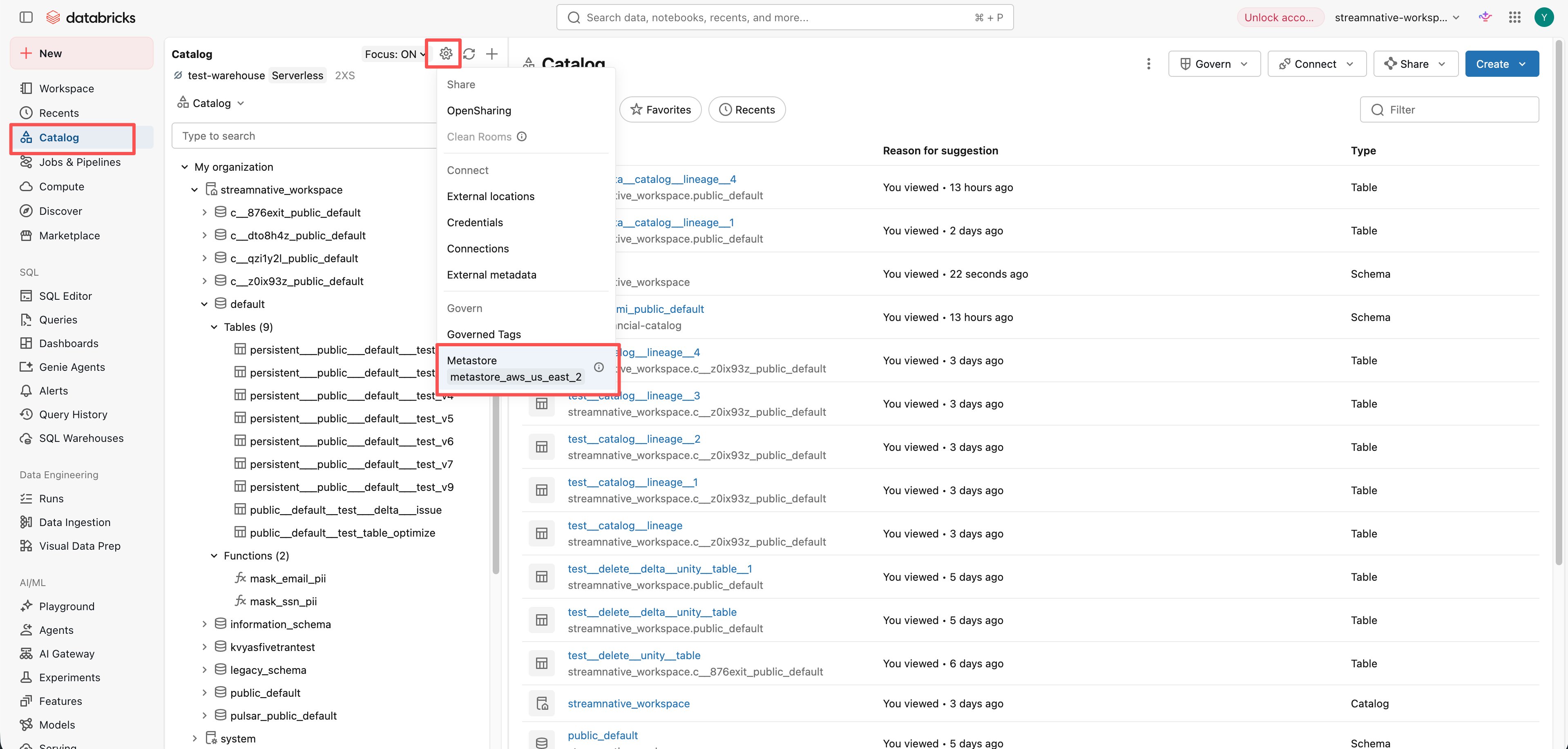
Open Catalog, click the settings icon, and select the metastore under Metastore.
-
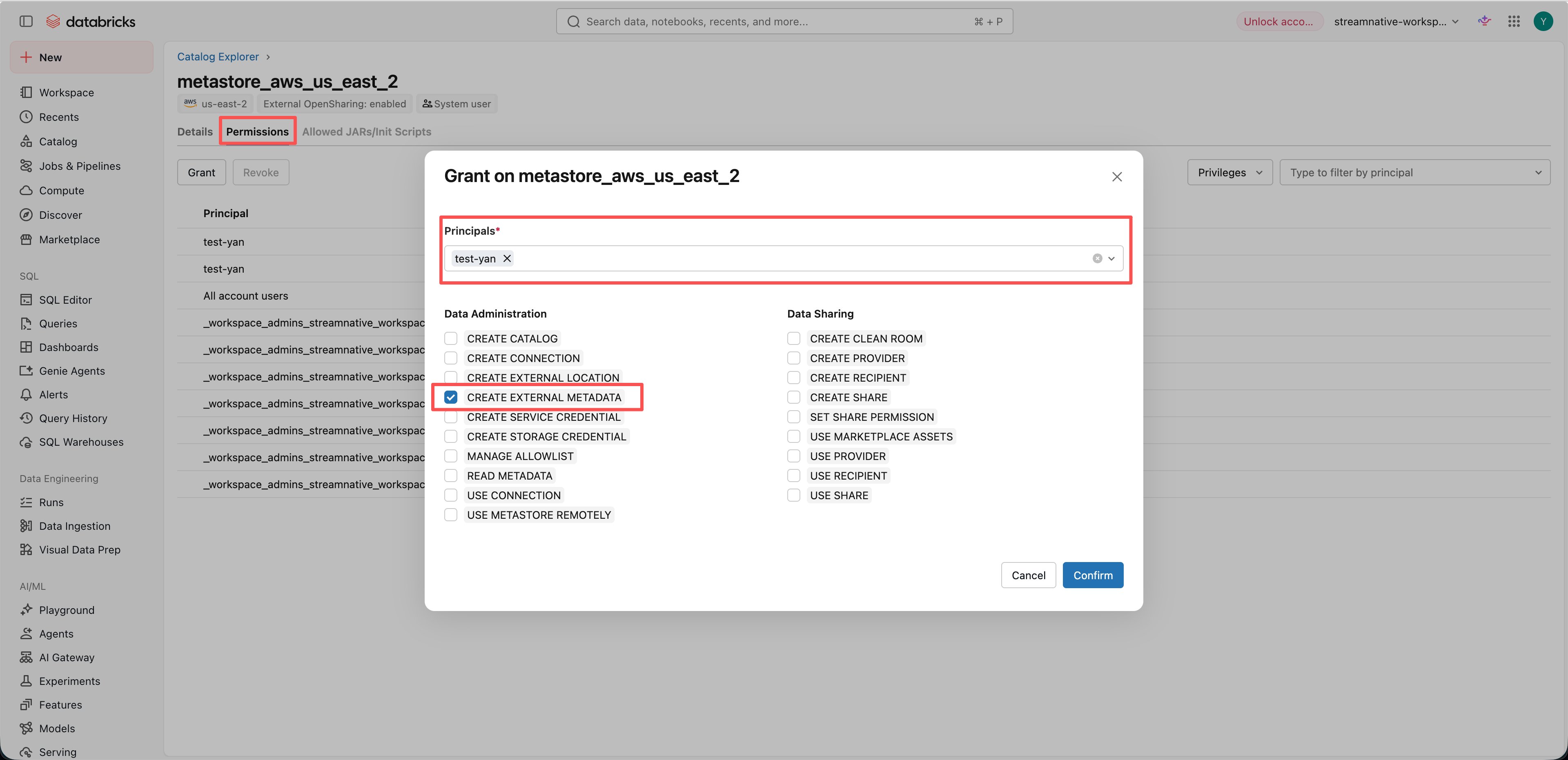
On the metastore page, select Permissions and click Grant. In Principals, select the service principal used by your StreamNative catalog connection. Select CREATE EXTERNAL METADATA, then click Confirm.
-
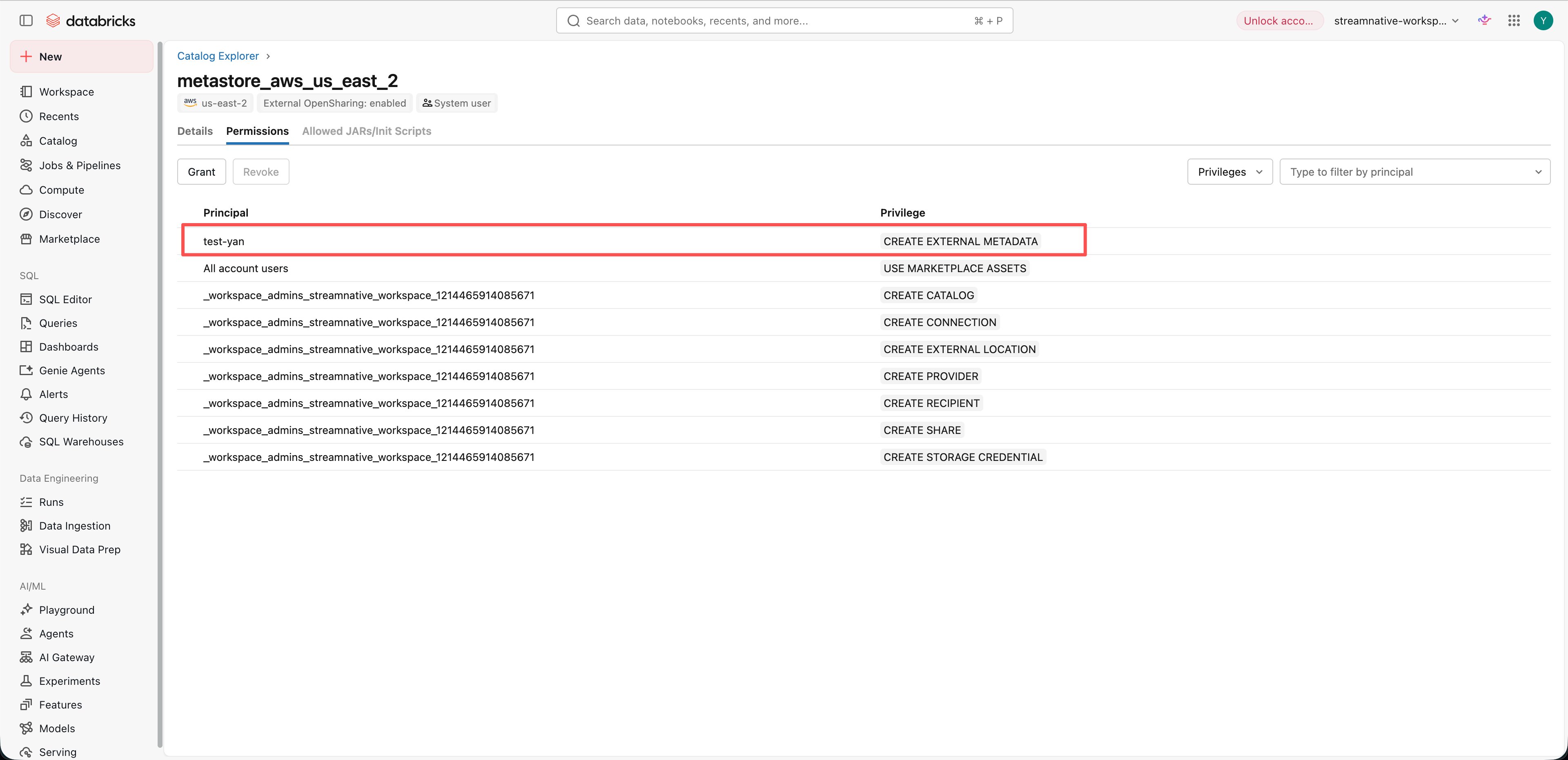
Verify that the Permissions tab lists the selected principal with the CREATE EXTERNAL METADATA privilege.
Enable Data Lineage
Data lineage is disabled by default. Set the following top-level property in the compaction service’s custom configuration:How It Works
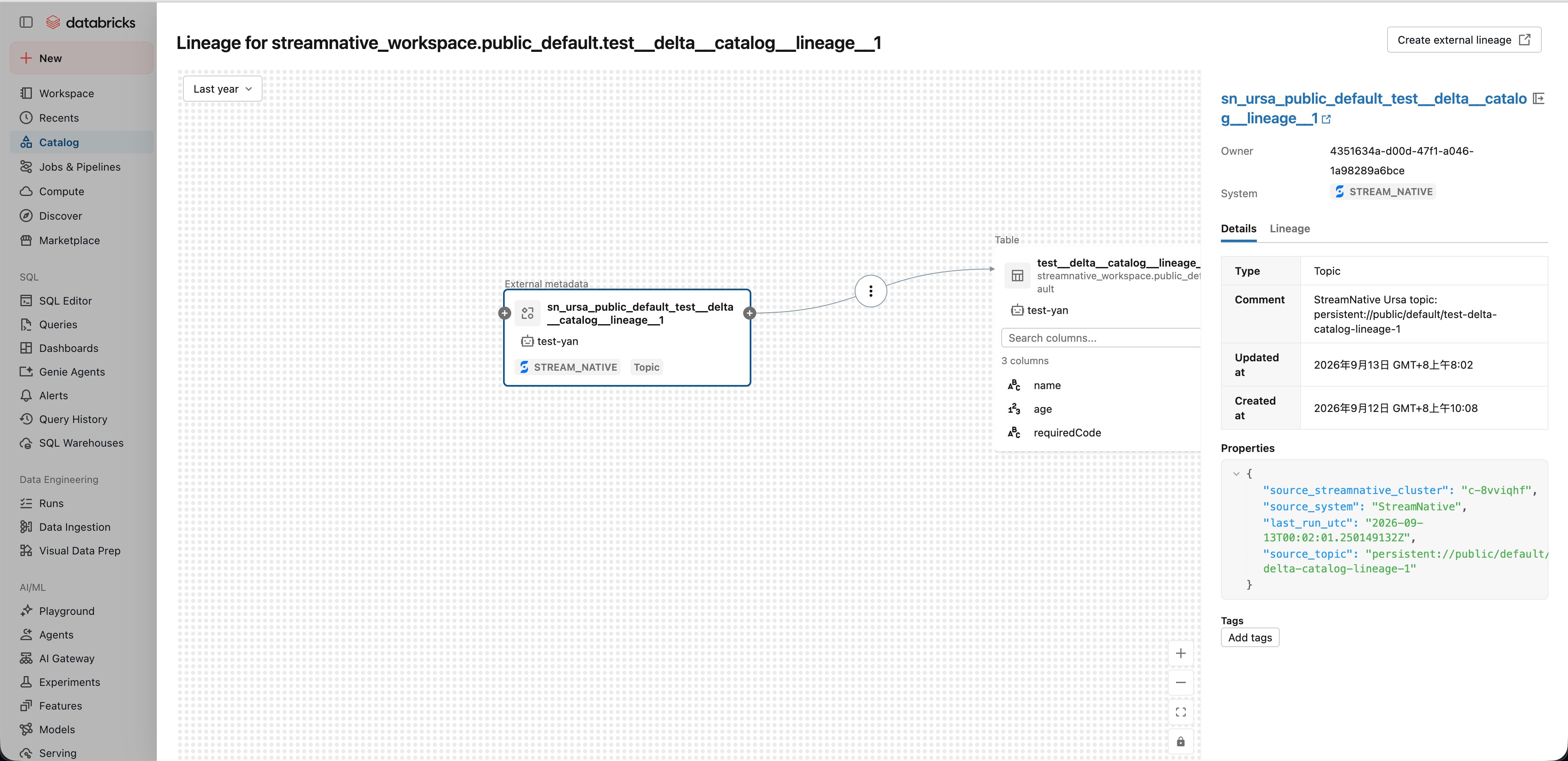
After topic data is committed to a lakehouse table, StreamNative registers the source topic as an external object in Unity Catalog and connects it to the destination table. The external object includes the topic name, StreamNative cluster name, source system, and latest report timestamp. Subsequent commits refresh the source metadata and retain the existing relationship. Reporting begins with the next lakehouse commit after the feature is enabled. Disabling data lineage stops future reports. Existing relationships remain in Unity Catalog.View Data Lineage
- Produce data to the topic and wait for it to be committed to the lakehouse table.
-
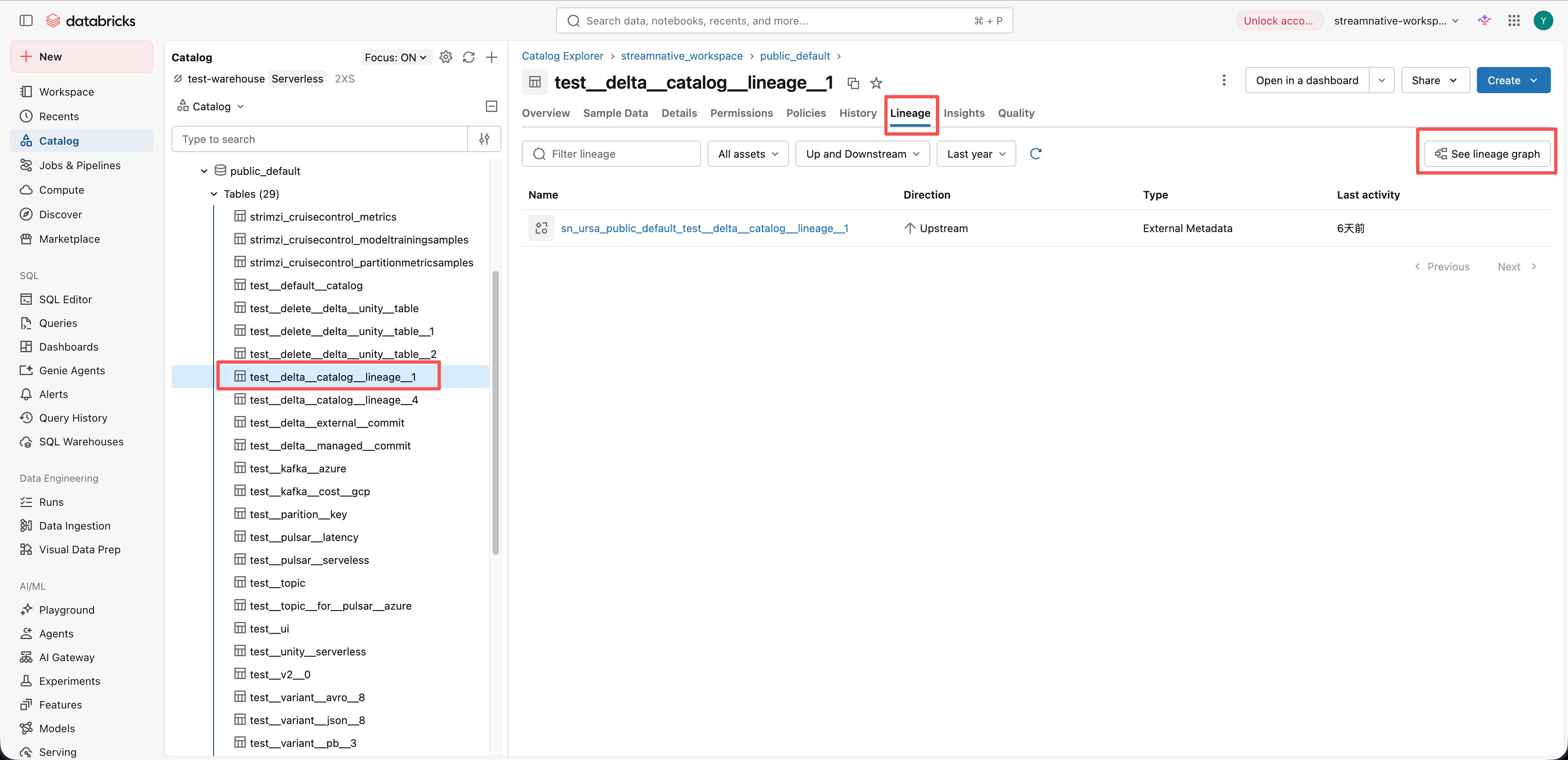
In Databricks Catalog Explorer, select the destination table, open the Lineage tab, and click See lineage graph.
-
Select the upstream external metadata node representing the StreamNative topic. The graph shows the topic-to-table relationship. In the details panel, inspect
source_topicandsource_streamnative_clusterto identify the source, andlast_run_utcfor the latest report timestamp.