

Before you begin
You need:- A Ready SQL Workspace.
- A Pulsar or Kafka cluster in the same organization.
- A cloud role that permits SQL Catalog management.
Add a catalog
- In the Cloud Console, click SQL.
- Open the workspace selector and click Manage workspaces.
- Open the action menu for the target workspace and click Manage.
- In the Databases section, click Import clusters.
- Select an instance.
- Select one or more Pulsar or Kafka clusters.
- Confirm the database name for each selected cluster.
- Click Import.
- Wait until each imported database reports Ready.
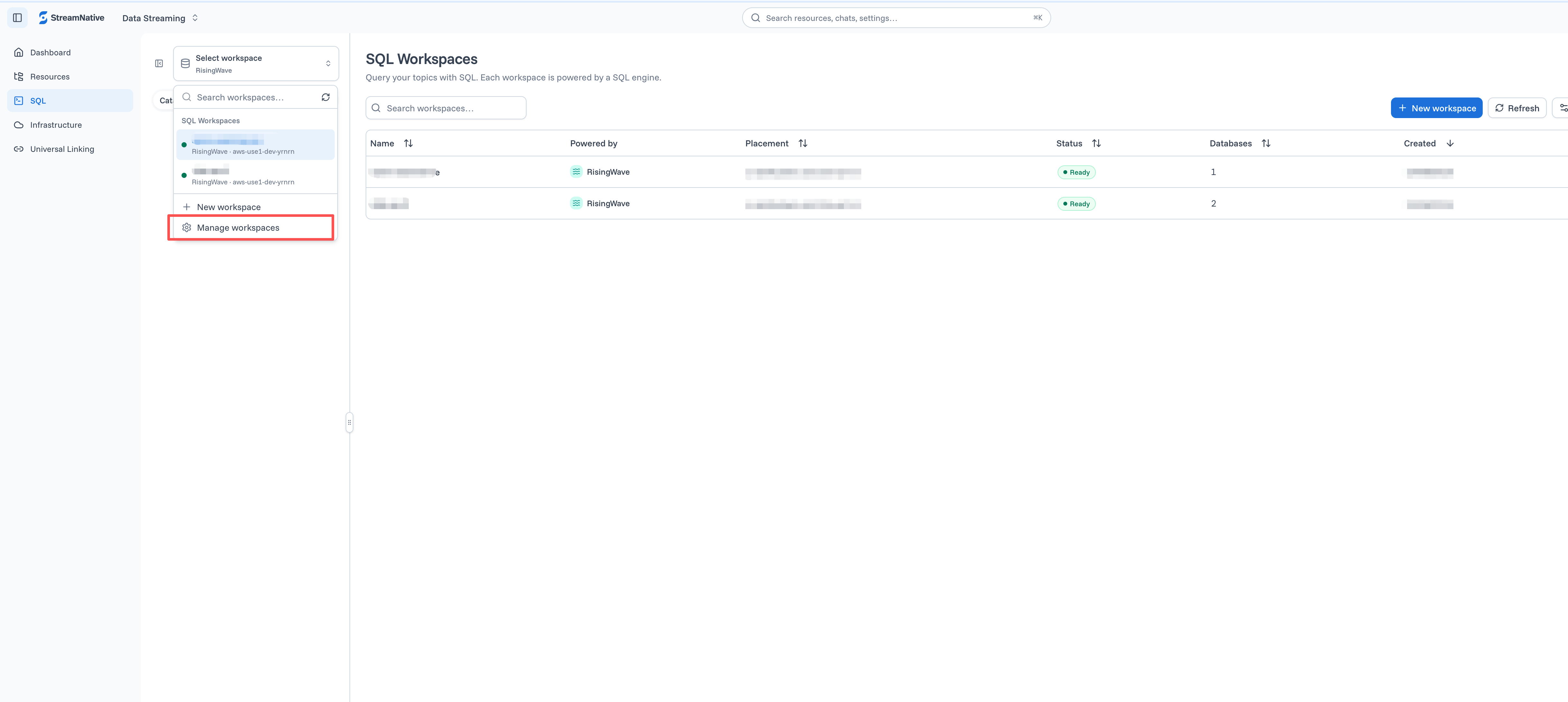
Open workspace management to view SQL Workspaces.
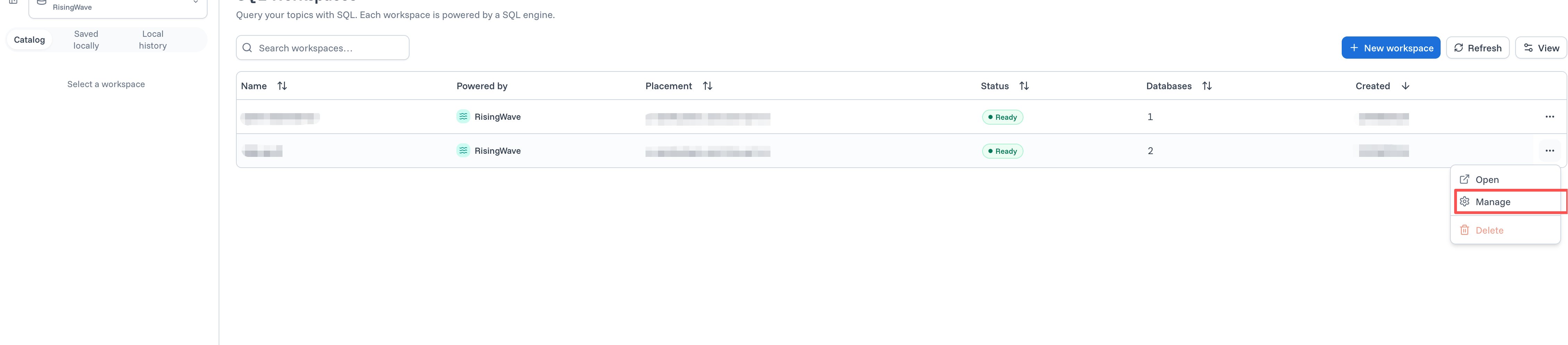
Open the action menu and manage the target SQL Workspace.
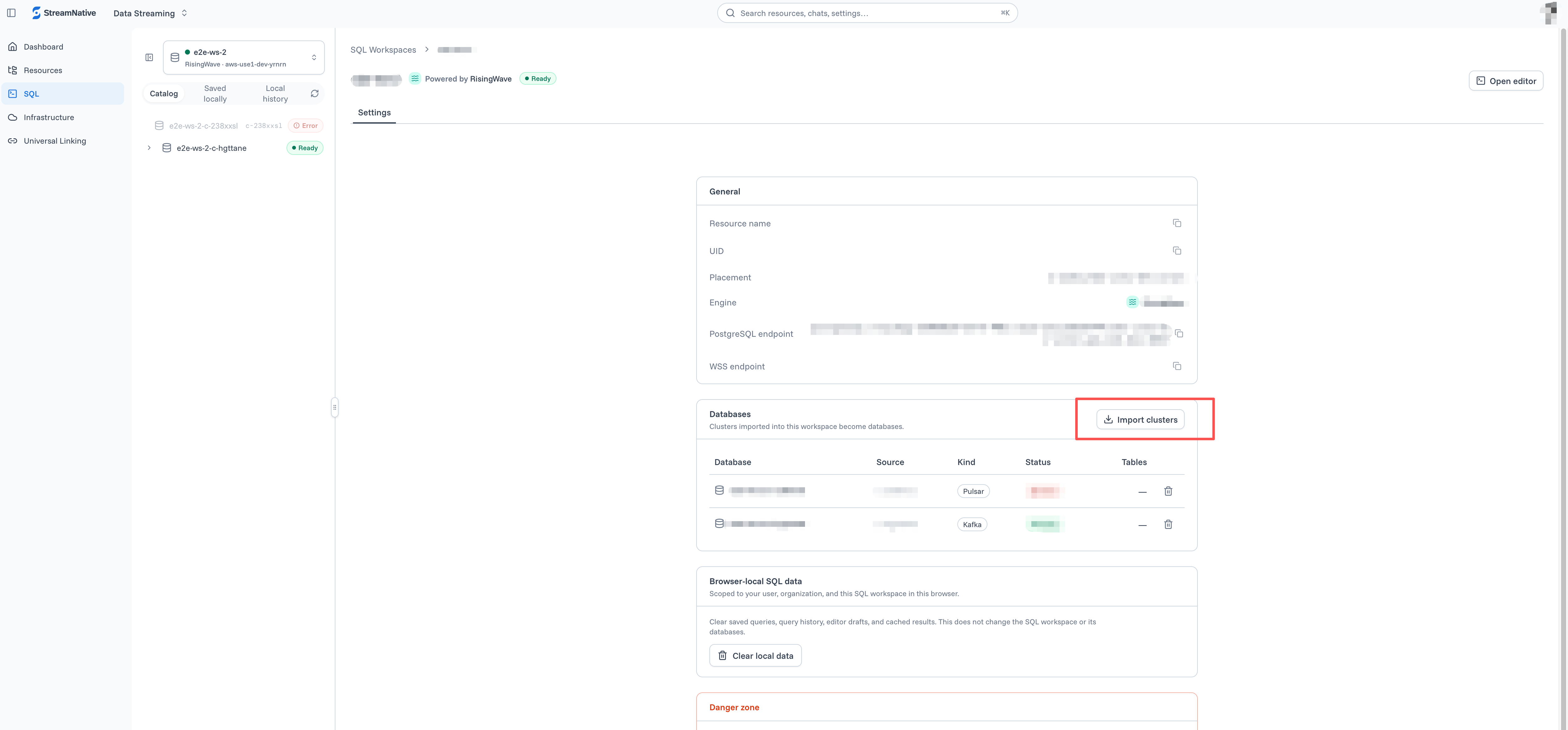
Import Pulsar or Kafka clusters as SQL Catalogs.
What happens next
StreamNative creates a database for each SQL Catalog, periodically discovers eligible topics, and creates missing source objects in that database. Refer to topic-derived schemas and sources with double-quoted identifiers. This Pulsar example uses thepublic/default namespace; Kafka sources use the public schema.