

How notifications work
The notification system is built on the following concepts:- Template-based rules: StreamNative provides a set of built-in alert templates. Each template defines the alert condition, severity, and configurable parameters. You create one or more rules from a template and specify the exact scope and recipients for each.
- Fine-grained scope: When creating a rule, you choose the scope at which the alert applies—organization-wide, or narrowed down to a specific instance, cluster, tenant, namespace, or function. This lets you route different alerts to different teams.
- Configurable recipients: Each rule can have its own list of recipient email addresses. If no recipients are specified, the alert falls back to your organization’s Technical Contact Email. You can configure the Technical Contact in your Organization Profile.
- Automatic email lifecycle: When a rule is triggered, an email is sent immediately. A follow-up email is sent once the issue is resolved.
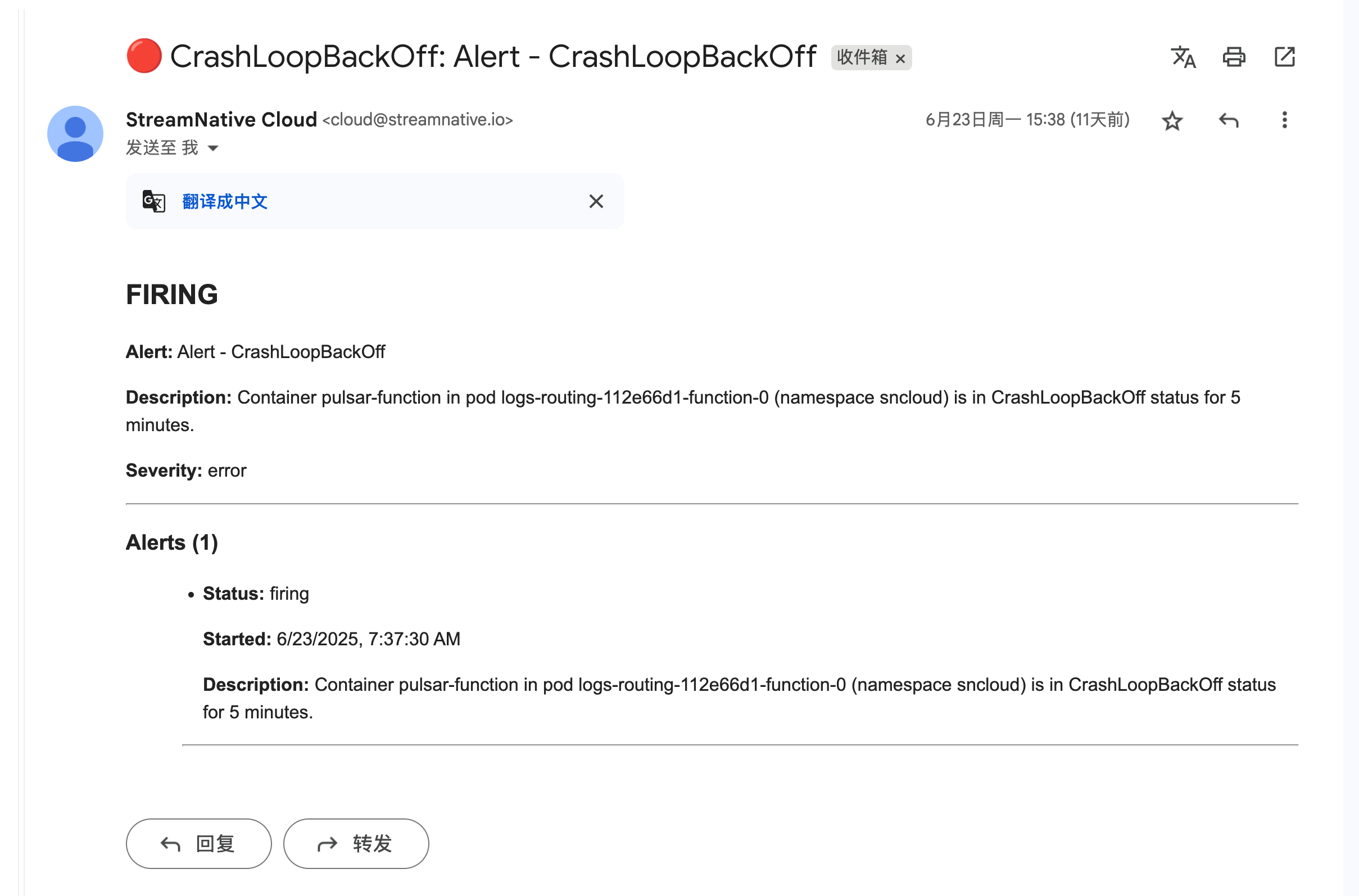
Available alert templates
The following built-in templates are available. You can create multiple rules from the same template with different scopes or recipients.Alert conditions and severity levels are defined by StreamNative based on operational best practices and cannot be modified.
Navigate to Notifications
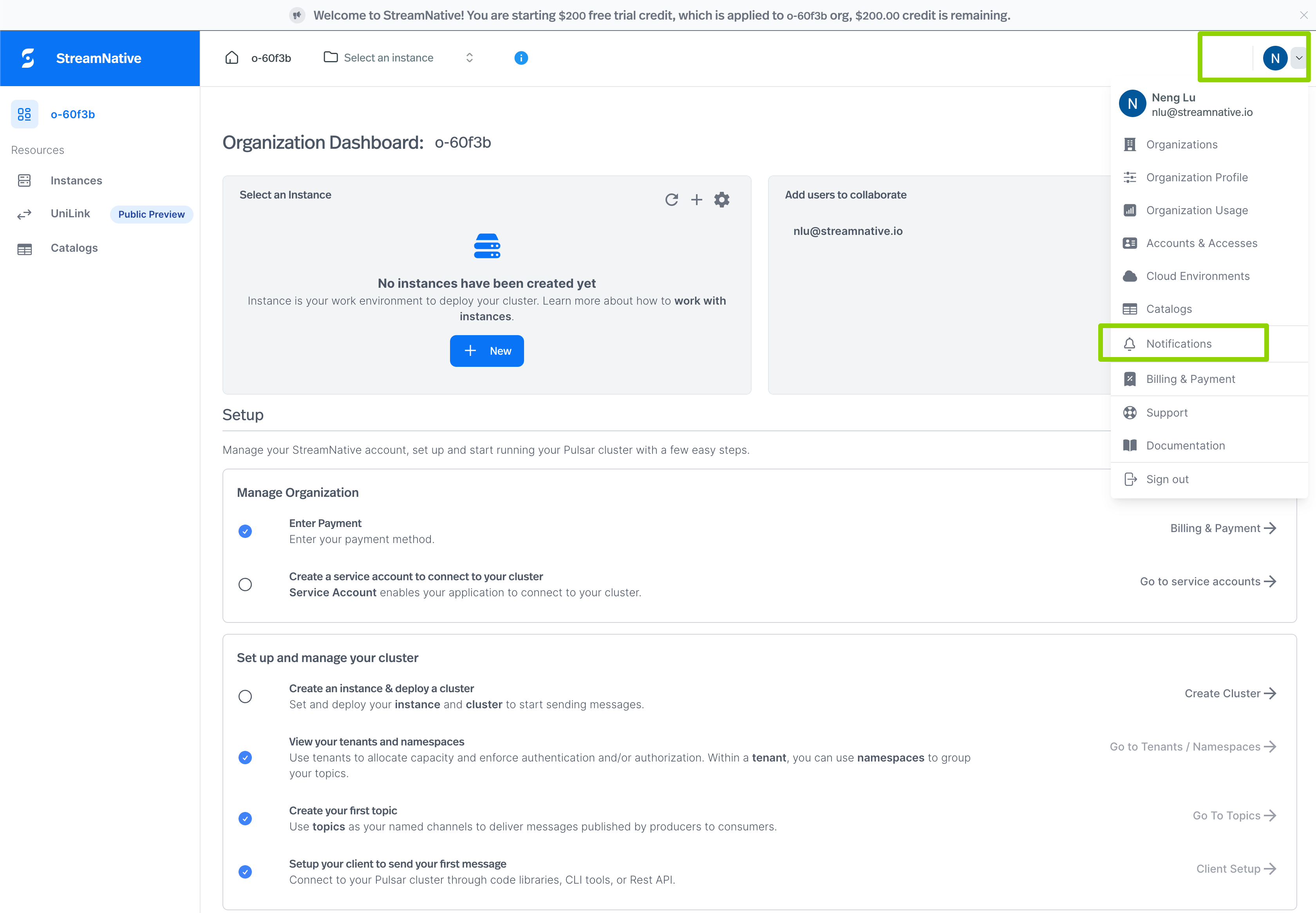
- Click the user icon in the top-right corner of the StreamNative Cloud Console.
- Select Notifications from the menu.
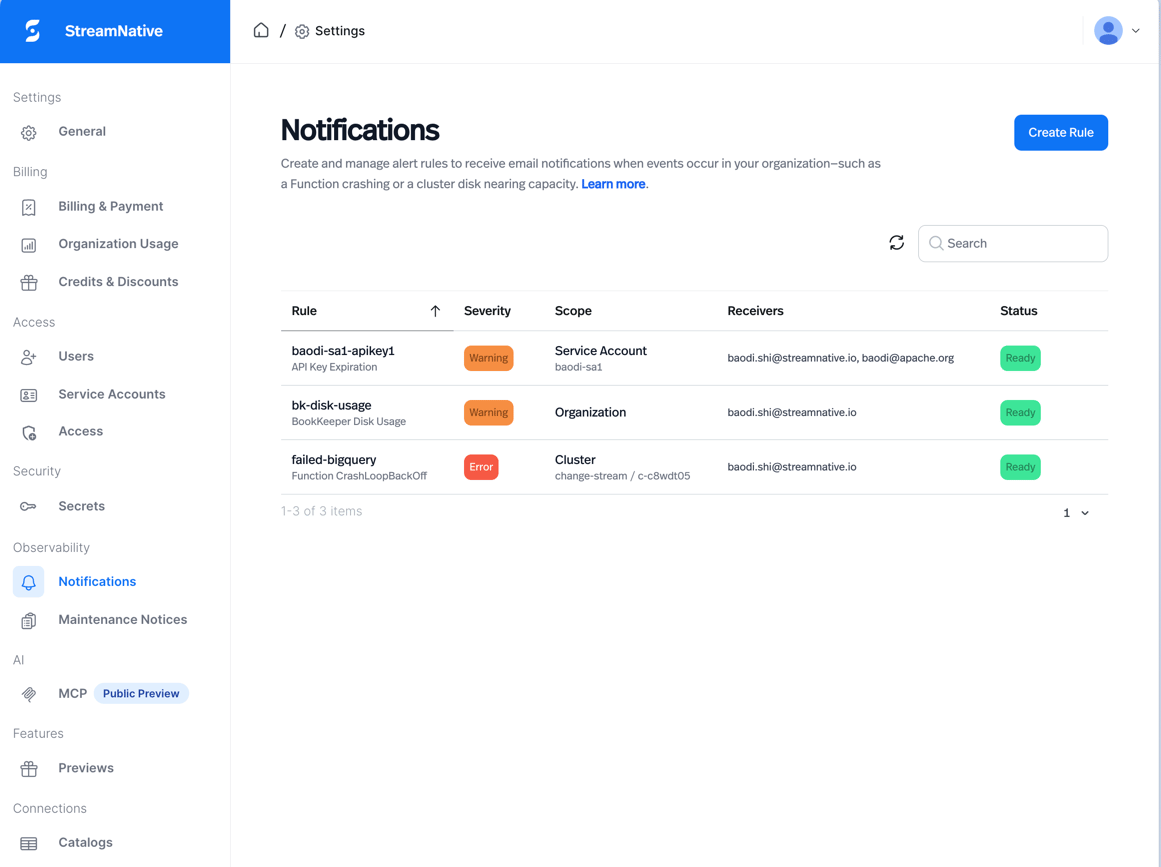
Create an alert rule
- On the Notifications page, click Create Rule.
-
In the Create Alert Rule dialog, fill in the following fields:
- Rule Name: A unique, lowercase identifier for this rule (for example,
oom-killed-prod-cluster). Must contain only lowercase letters, numbers, and hyphens. - Alert Template: Select the condition type from the dropdown. A short description of the template appears below the selector.
- Rule Name: A unique, lowercase identifier for this rule (for example,
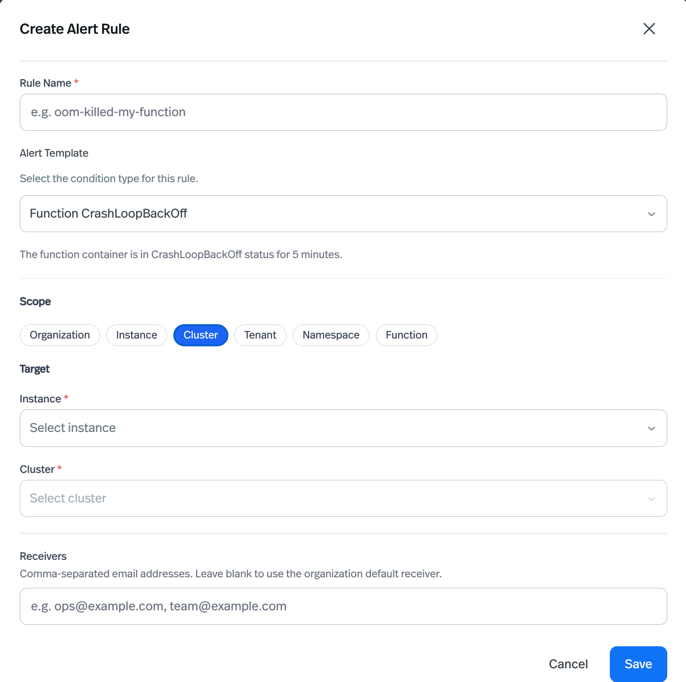
- (Optional) Set the scope: By default, a rule applies to your entire organization. To narrow the scope, click a scope pill (for example, Instance, Cluster, Function) and fill in the target value(s). Leaving the scope at Organization means the rule monitors all matching resources in your organization.
-
(Optional) Set recipients: Enter one or more email addresses (comma-separated) in the Receivers field.
For the BookKeeper Disk Usage template, the receiver is fixed to your organization’s Technical Contact Email and cannot be overridden here. To change that email, update your Organization Profile.
- Click Save. The new rule appears in the list with status Reconciling while it is being set up, and transitions to Ready once active.
View rule details
Click any row in the Notifications list to open the rule detail panel. The detail view shows:- Basic Info: Rule name, alert template, description, scope, and severity.
- Delivery: The configured recipient email addresses (or a note indicating the organization default is used).
Delete an alert rule
- Hover over the rule row in the list to reveal the Delete icon on the right.
- Click the Delete icon.
- In the confirmation dialog, type the rule name to confirm deletion, then click Delete.